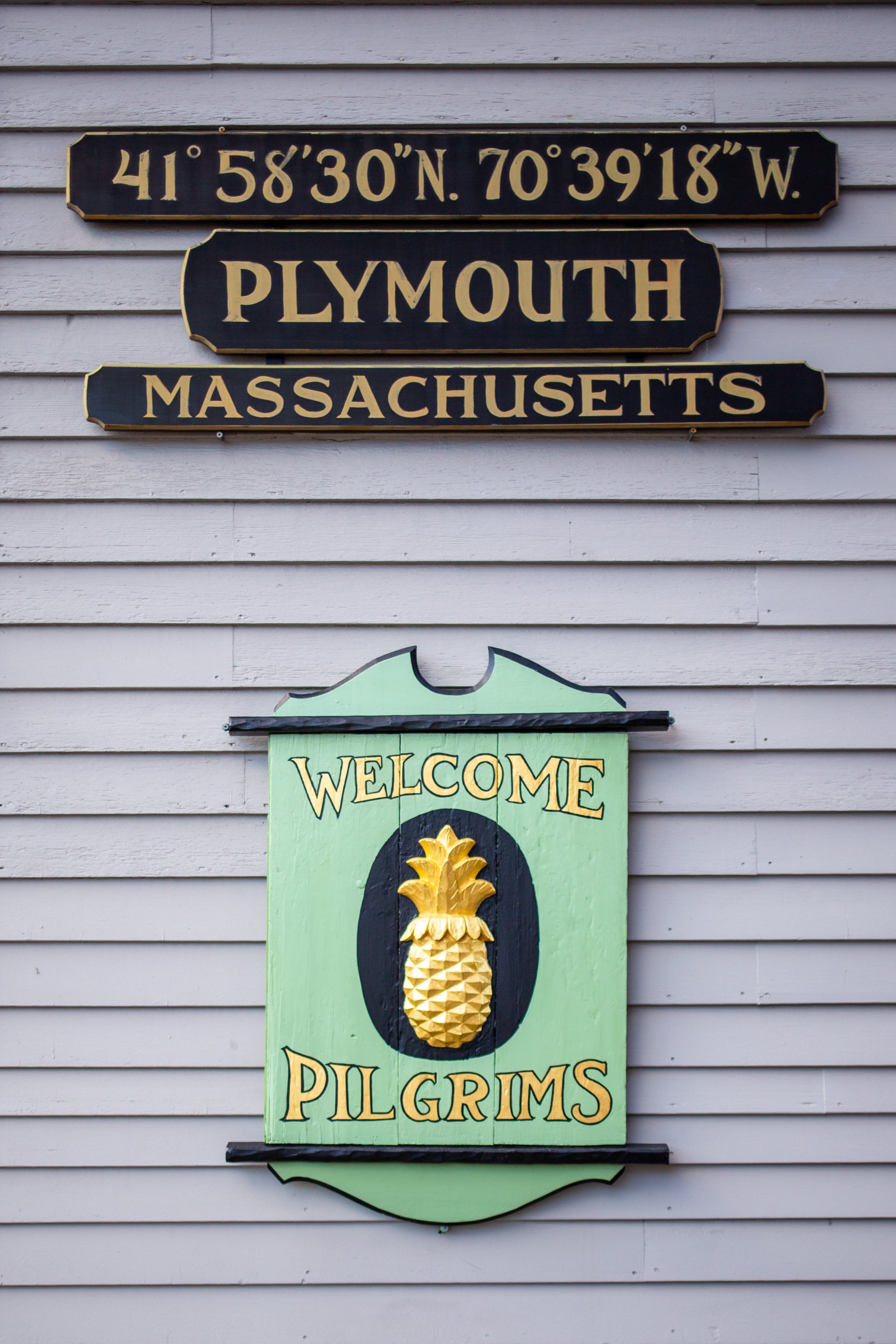
Last year, I had just moved back to New York City and didn't have plans for Thanksgiving. I stopped visiting family in Ohio for holidays years ago (for many reasons) and as an adult, I've never maintained a Thanksgiving routine for more than a few years in a row. So I was excited to have a clean slate—and since I had just decided to keep my car, a road trip seemed like the best option. There was really only one natural choice, and luckily it was only a 4-hour drive from my home in upper Manhattan: Plymouth, Massachusetts.
Unlike the Pilgrims in 1620, my journey to Plymouth was quick and pleasant. October may get all the glory and December has Christmas, but November is my favorite month. I love the cooler temperatures and the liminal pause between the frenzy of Halloween and the end of the year. It's also the perfect time to take a road trip—as long as you leave early enough to limit nighttime driving and the weather cooperates. But when the stars align, there's nothing like driving along desolate East Coast backroads as the remaining leaves dance to their deaths and the crisp afternoon sun casts bare branches into sharp relief.
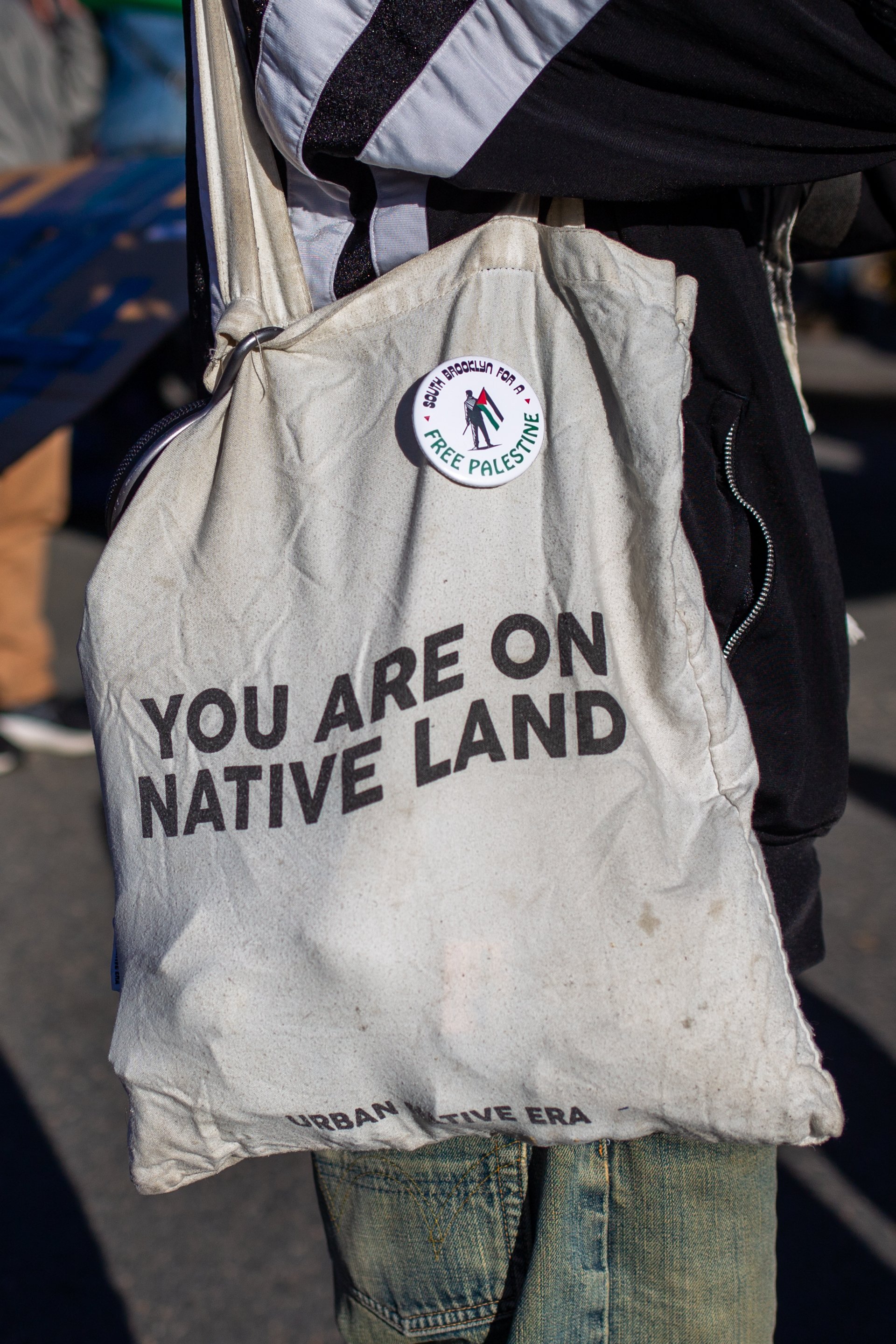
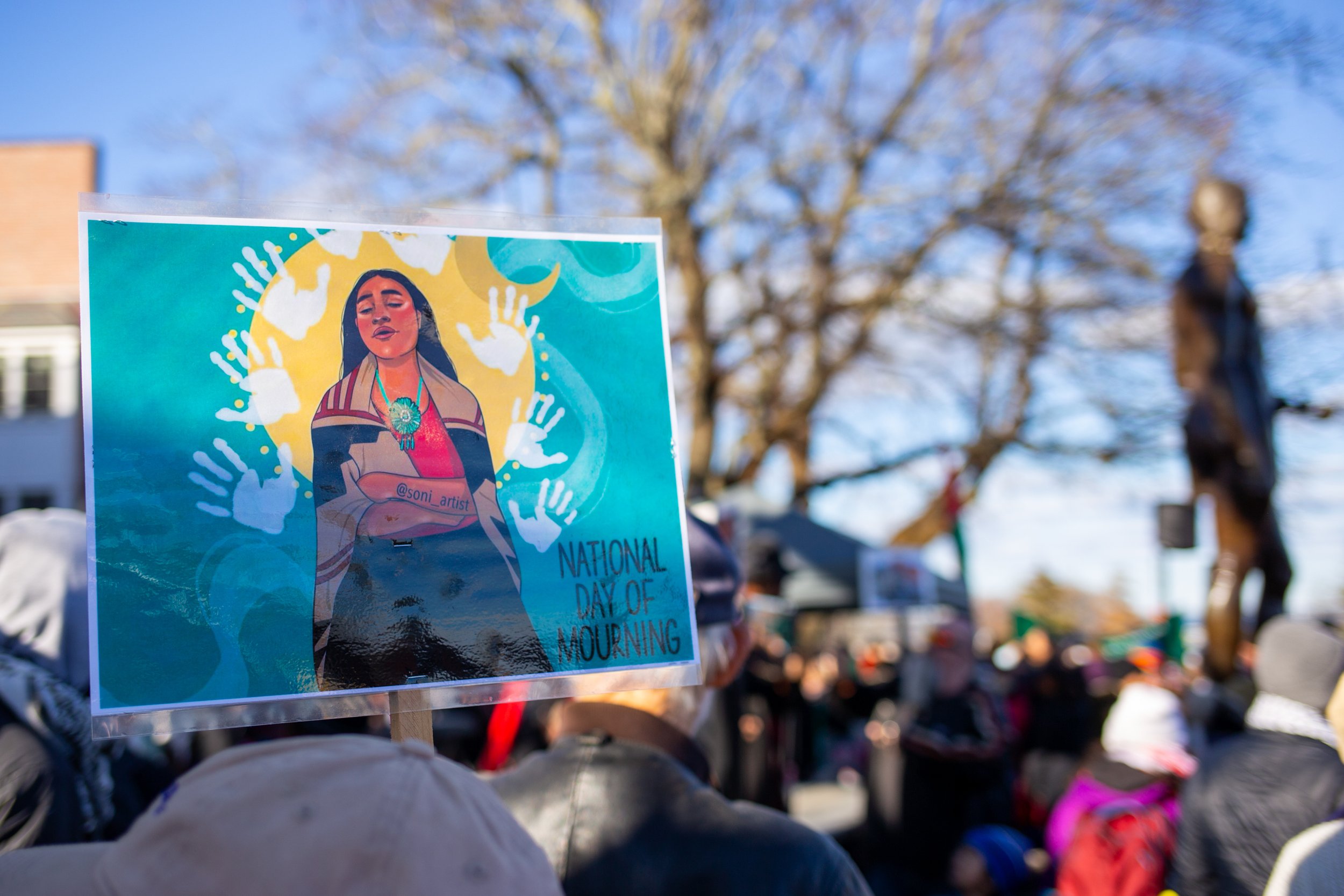
My goals for the trip were twofold: explore the town of Plymouth and attend the National Day of Mourning rally. Every year since 1970, Indigenous people and their allies have held a rally and march in Plymouth. National Day of Mourning is a counterpoint to the narrative that European settlers were welcomed to the shores of present-day Massachusetts with open arms. To many Indigneous people (and anyone else who has learned to question the myth of American exceptionalism), "Thanksgiving Day is a reminder of the genocide of millions of Native people, the theft of Native lands, and the erasure of Native cultures," according to the United American Indians of New England (UAINE).
UAINE's website explains that "participants in National Day of Mourning honor Indigenous ancestors and Native resilience. It is a day of remembrance and spiritual connection, as well as a protest against the racism and oppression that Indigenous people continue to experience worldwide."
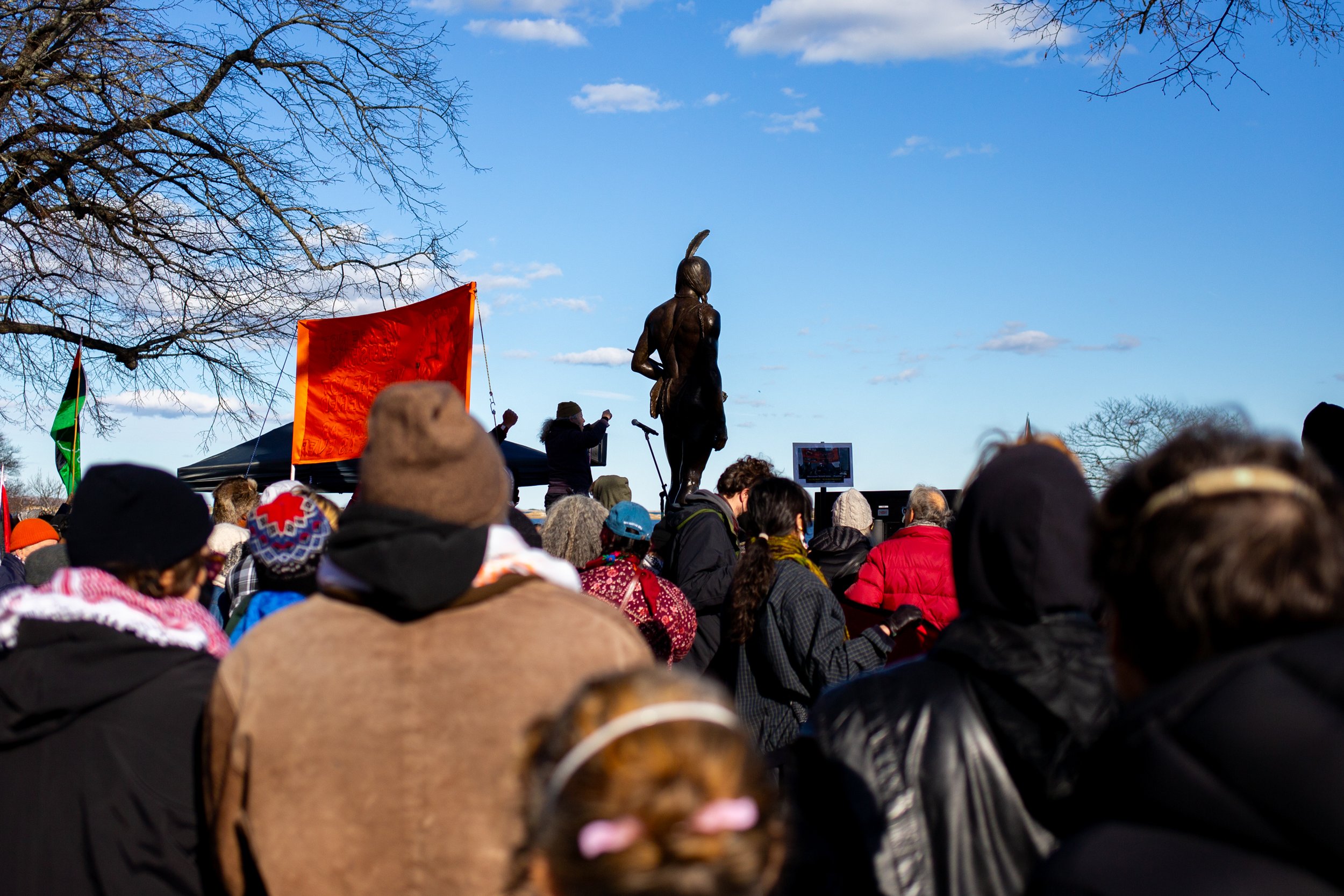
At 12 p.m. on the fourth Thursday in November, UAINE gathers at Cole’s Hill, which looms above Plymouth Rock on the shore of Plymouth Bay. It's a breathtaking setting for a somber occasion; the crowd forms around Massasoit, a statue completed in 1921 to mark the tricentenary of the Pilgrims' landing. Modeled after the leader of the Wampanoag Confederacy, Massasoit (meaning “great leader”) was his title, but true to form, English colonists mistook it for his name.
Weakened by various illnesses and threatened by nearby tribes, the Wampanoag peoples formed an alliance with the members of Plymouth Colony; in return the colony was able to skirt starvation and survive their new home. Of course what followed is not unique to the Wampanoag: more epidemics, wars, broken treaties, and forced conversions to Christianity, just to name a few of the dire challenges Indigenous people faced with the arrival of each new wave of colonists.
And the conflict continues today: Following a particularly violent response by Plymouth police officers to National Day of Mourning marchers in 1997 (“Participants were dragged by their hair and the police kneeled on the necks of protesters. Pepper spray was used on numerous people, including those who were handcuffed,” according to UAINE), the town agreed to help facilitate—and not interfere with—the annual event. Last year, Plymouth tried to terminate the agreement, but UAINE successfully defended their right to rally in court. This year however, the town is once again trying to violate the settlement, refusing to provide the group with a stage and making other egregious demands.
“We believe they are throwing up roadblocks because they don’t want the tourists to see or hear Native Americans who are speaking about the true history of the Pilgrim invasion and resulting land theft and genocide of Wampanoag and other Native peoples,” Mahtowin Munro, co-leader of UAINE said.
Kisha James, another co-leader of UAINE, says that “Plymouth clearly cares more about preserving the ‘America’s Hometown’ fantasy it has created for itself than it cares about freedom of speech or meeting its obligations to UAINE under the 1998 agreement.”
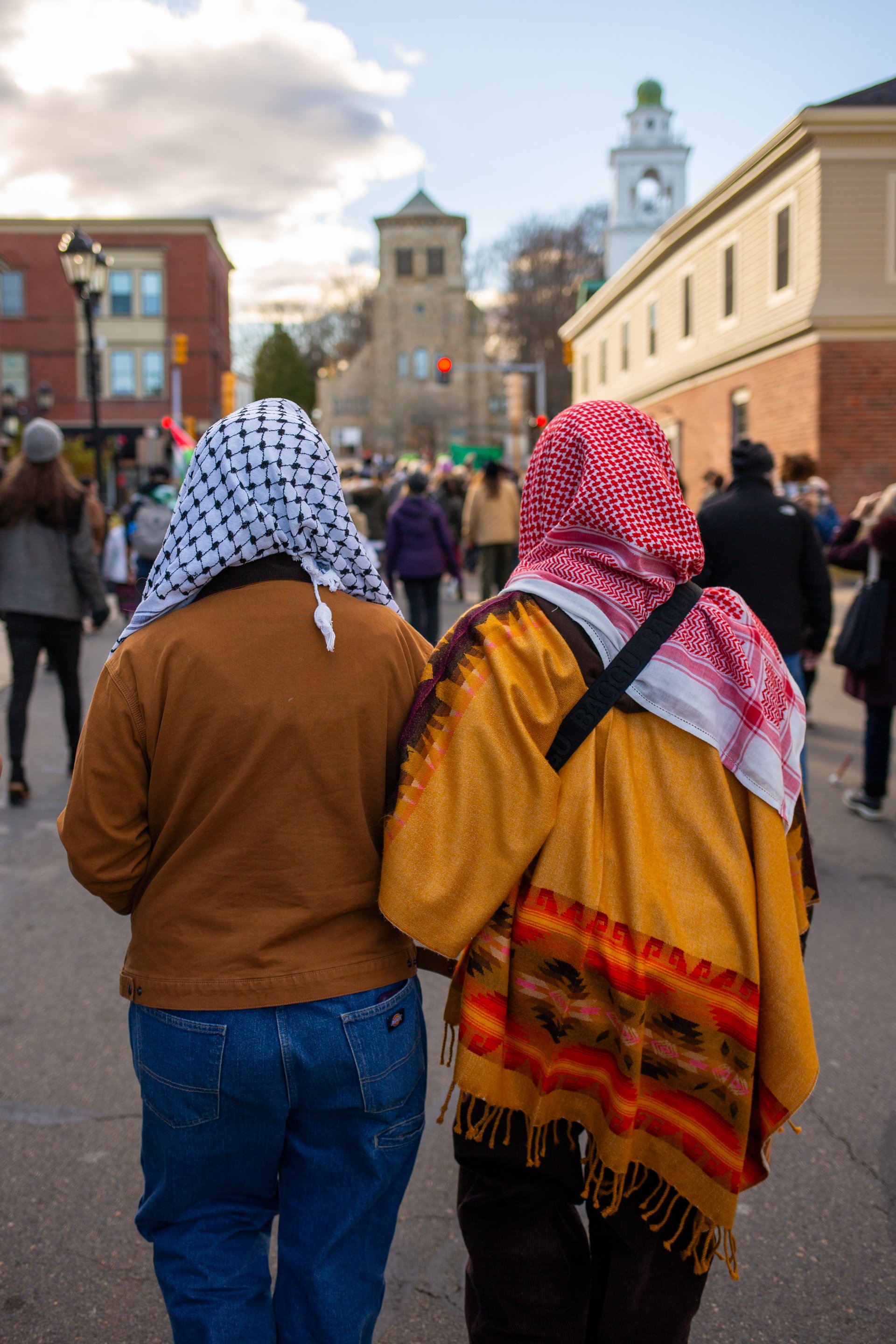
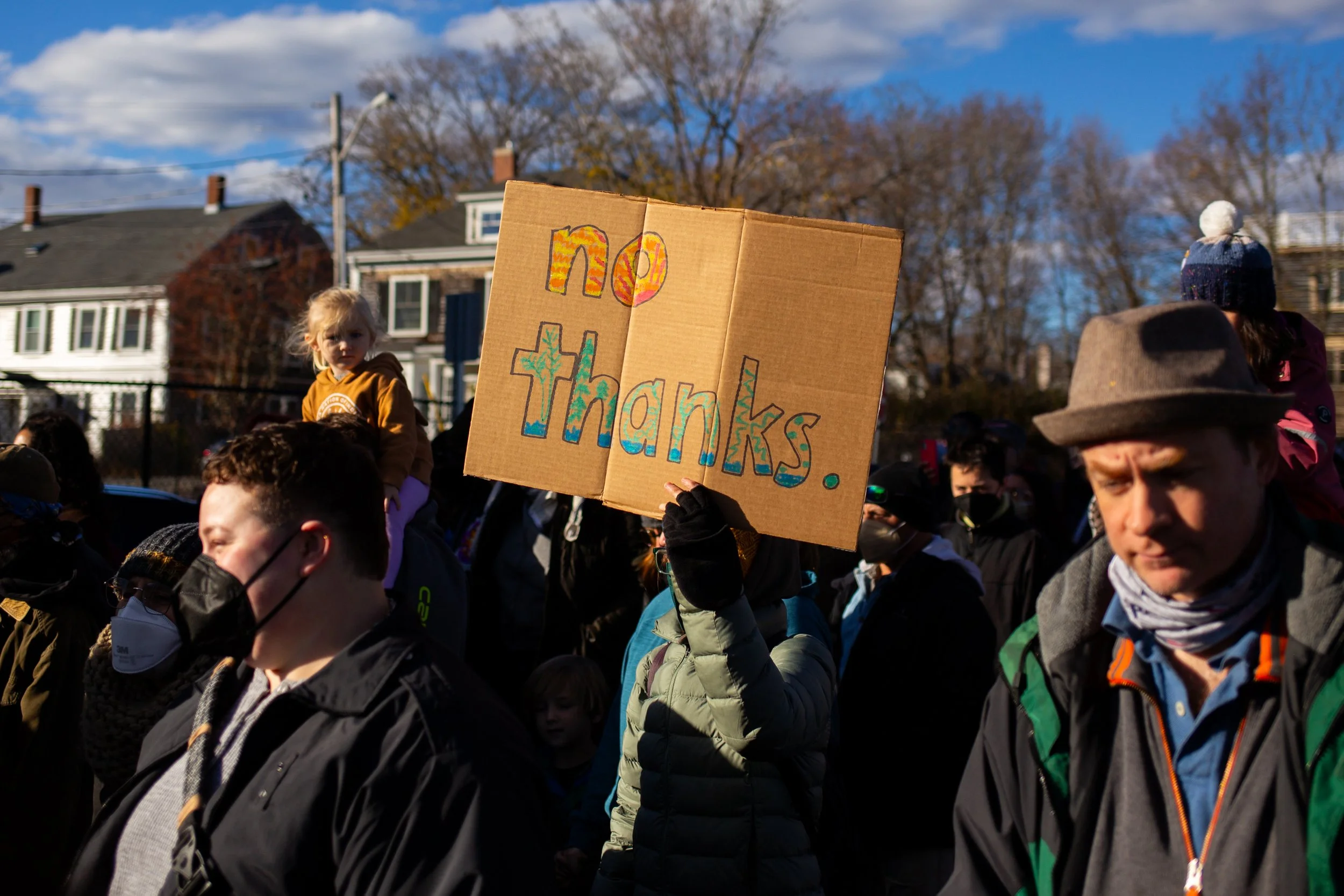
The rally I attended was peaceful and powerful. While allies are a welcome and crucial part of the day, speakers are exclusively Indigenous. They spoke of interconnected struggles across the globe (most drew direct parallels to the modern-day genocide in Palestine), and Native American activist Leonard Peltier, whose dubious 1970s prison sentence for allegedly murdering two FBI agents was finally commuted in January 2025, spoke to the crowd via a livestream from his home in North Dakota.
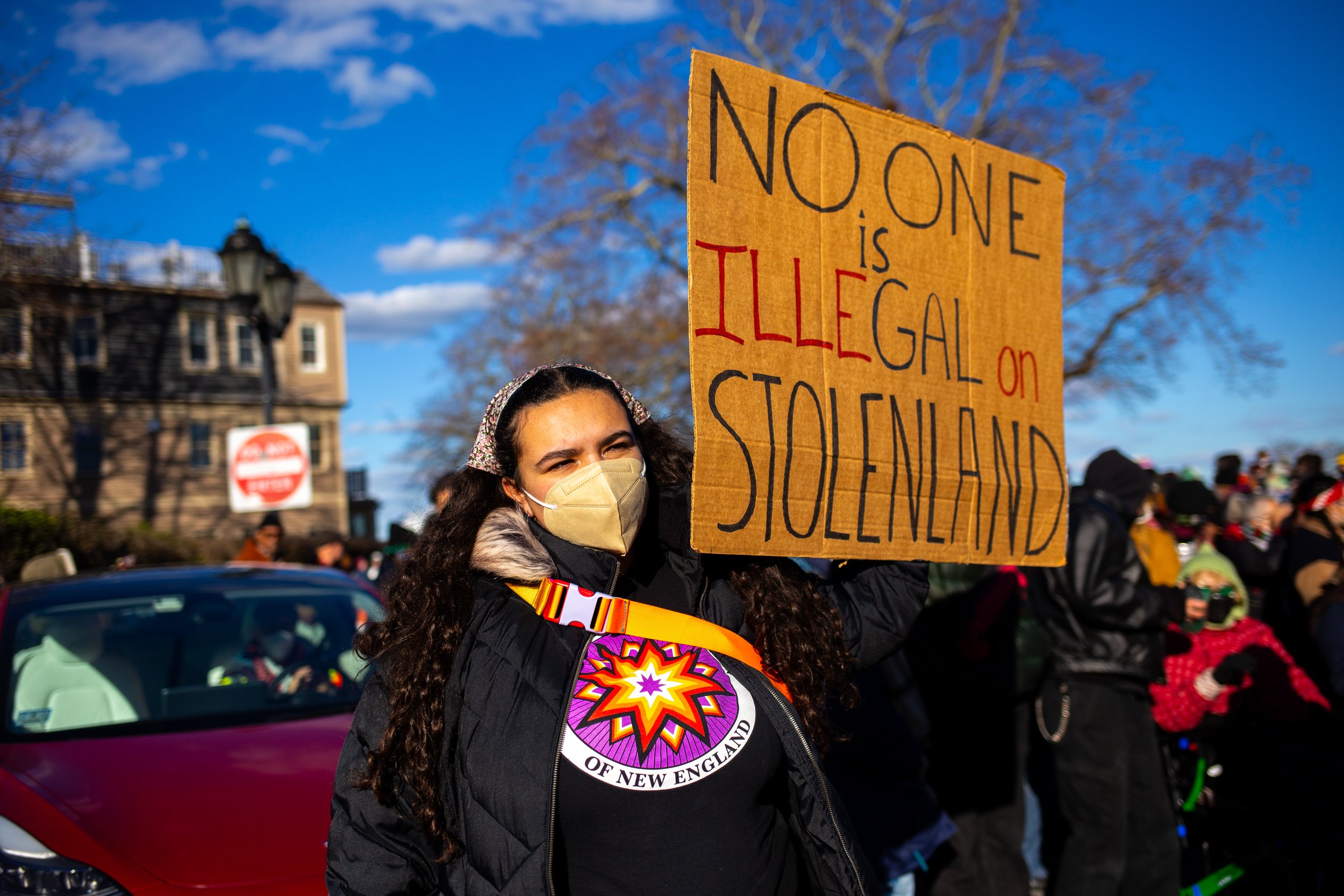
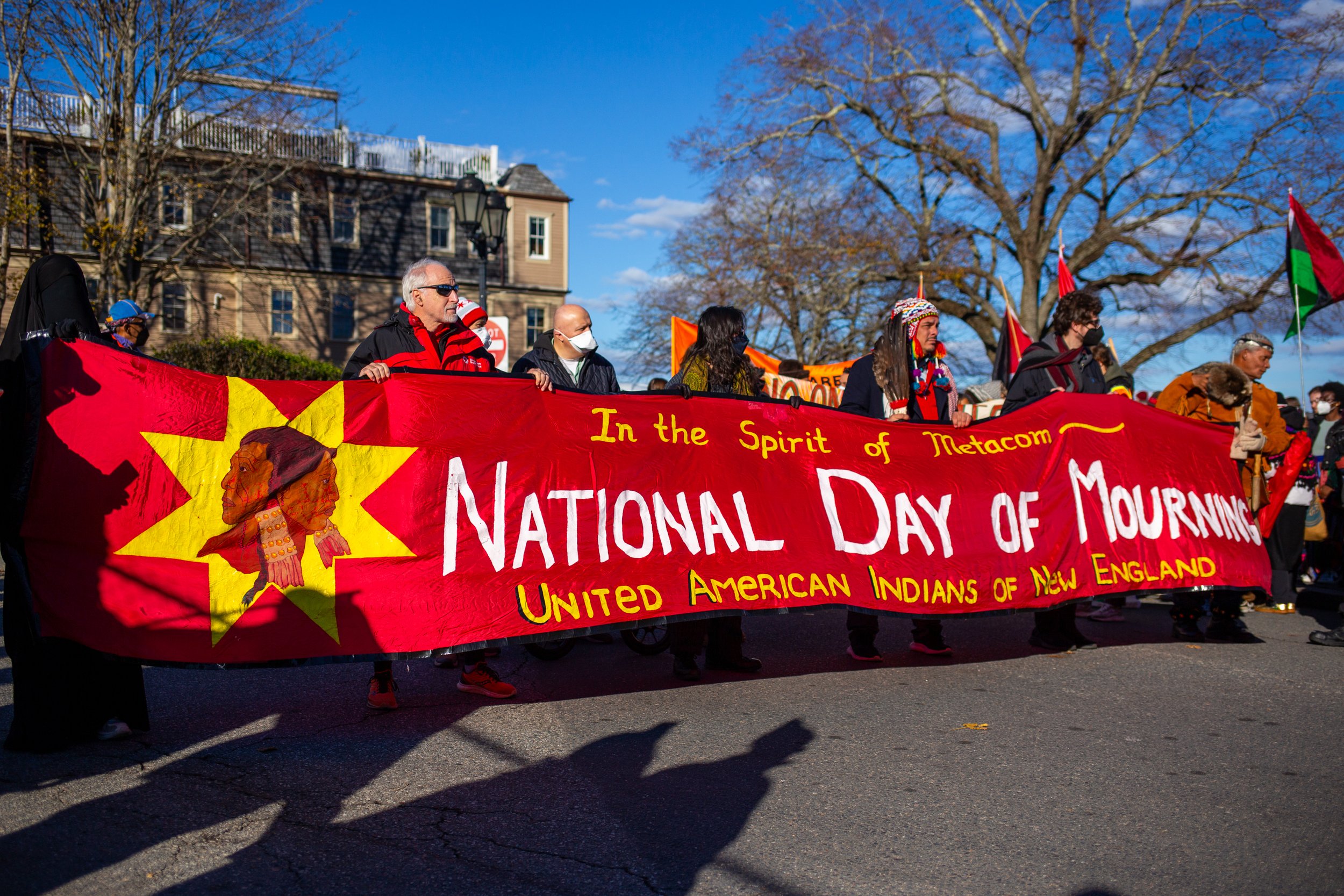
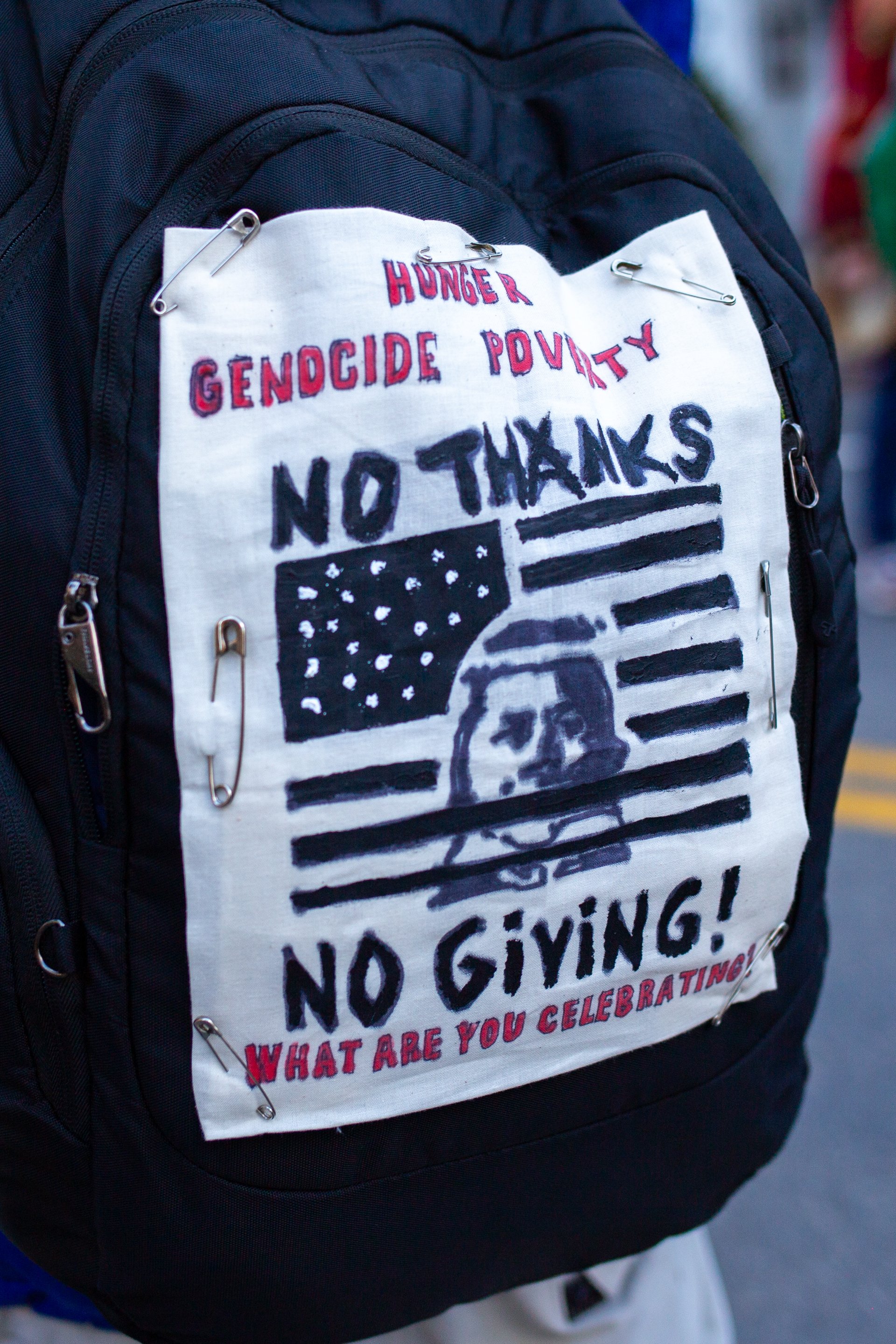
Marchers walked behind a handpainted UAINE banner that declared the National Day of Mourning to be “in the spirit of Metacom,” the Wampanoag’s chief from 1662 to 1676 (and Massasoit’s successor). They chanted anti-imperialist slogans such as “Cops here, bombs there, U.S. out of everywhere,” and “When freedom is under attack, what do you do? Stand up, fight back!” Handdrawn signs read “Hunger, genocide, poverty, No Thanks, No Giving, What are you celebrating?”; “No one is illegal on stolen land,”; and, my favorite for its simplicity: “No thanks.”
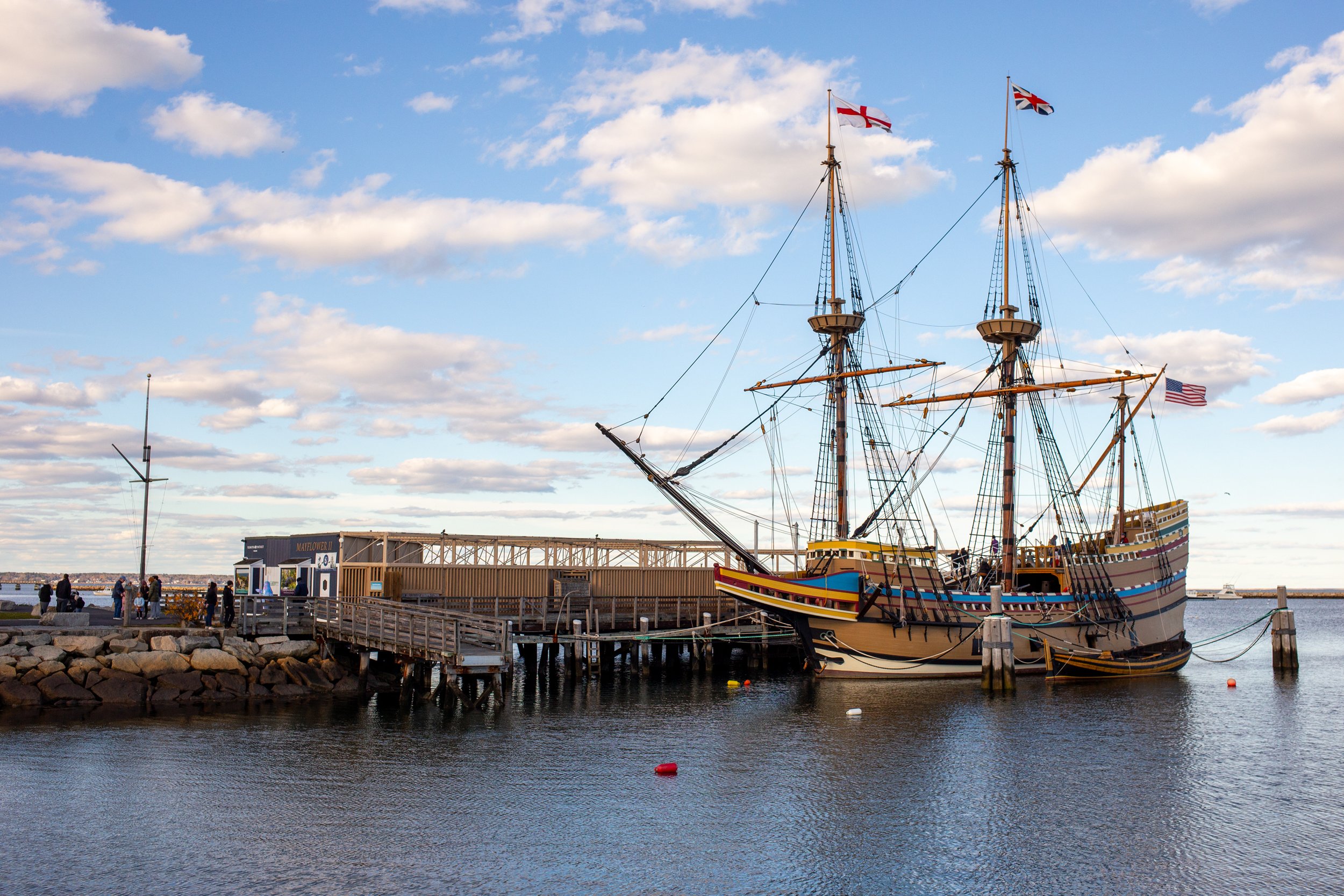
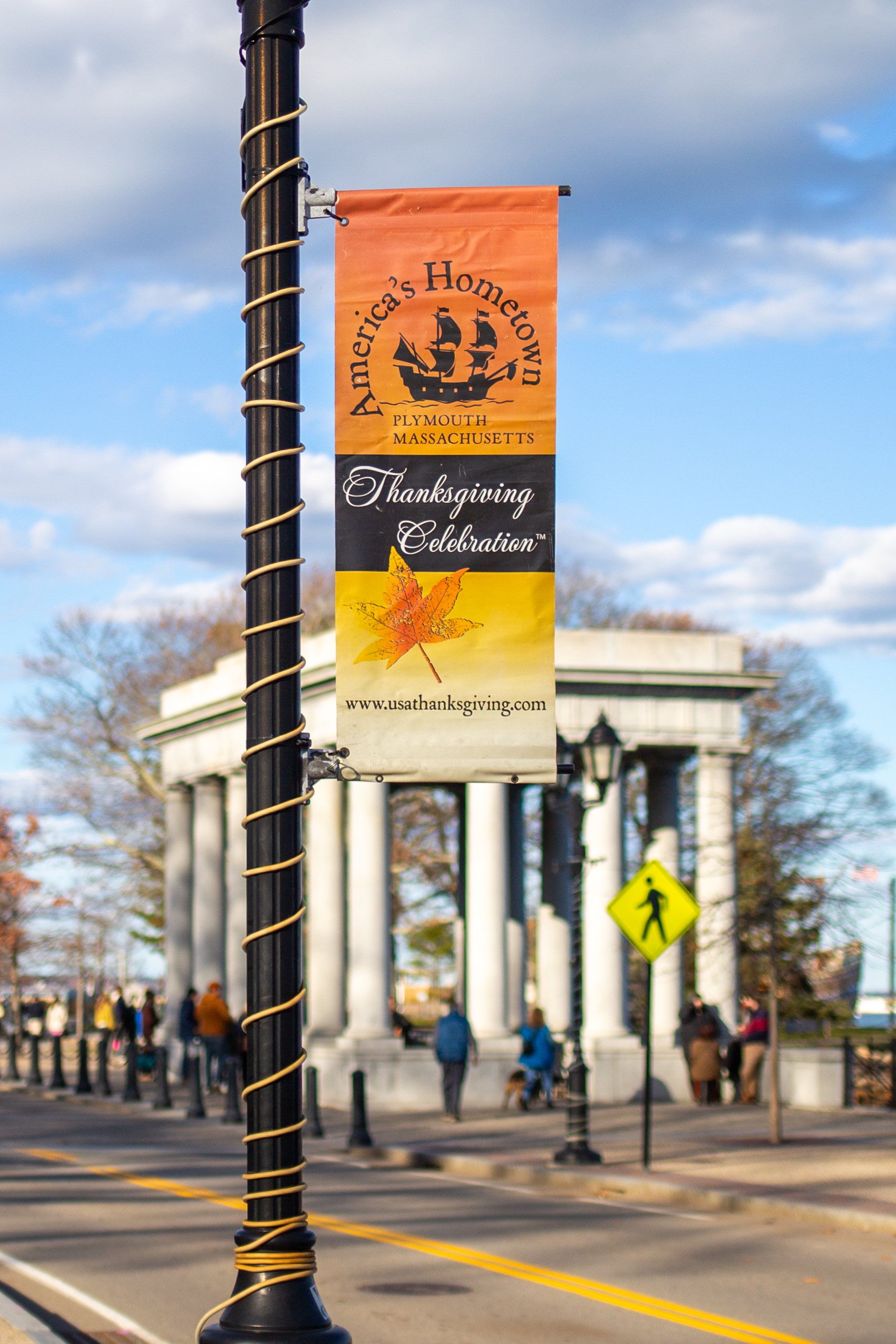
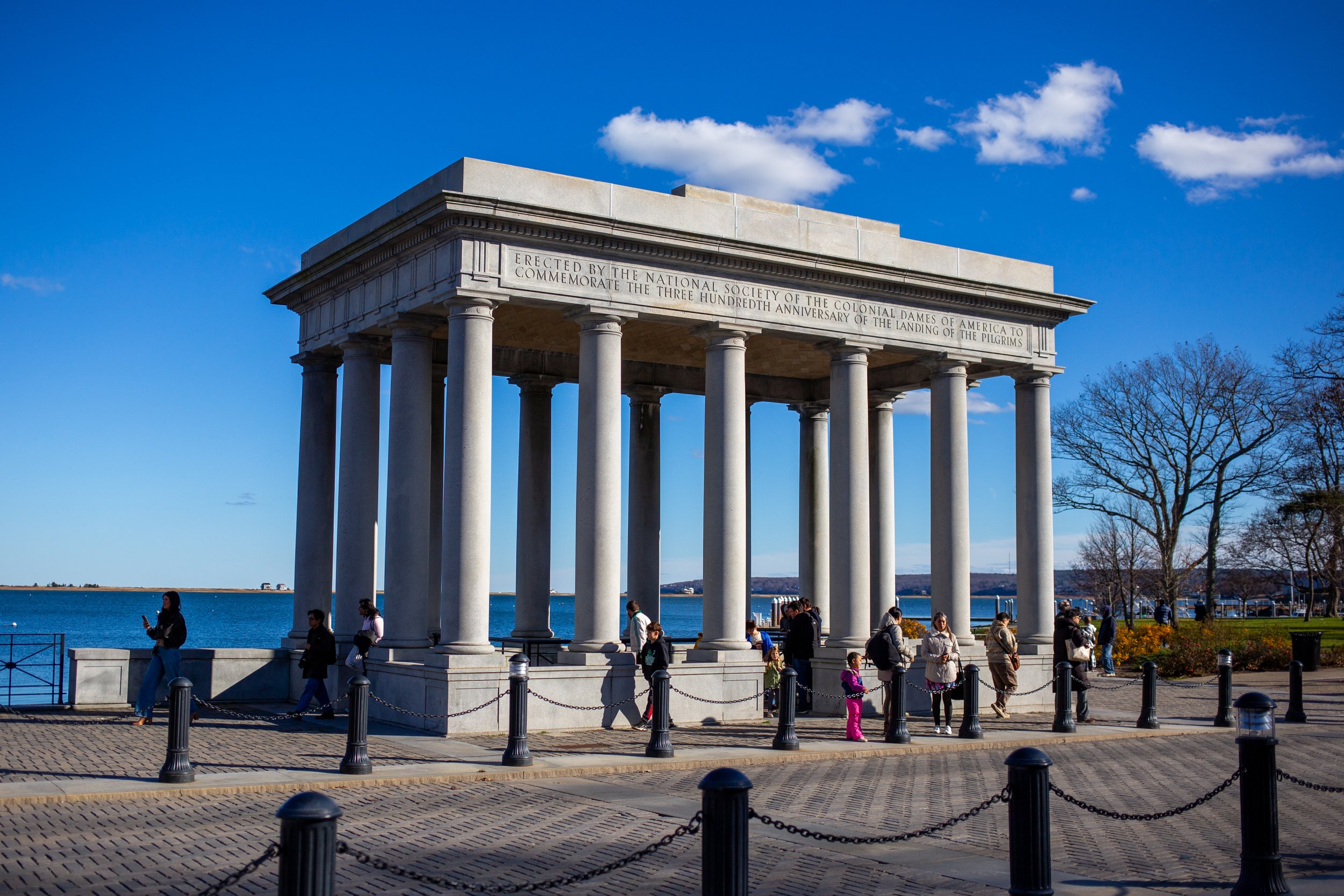
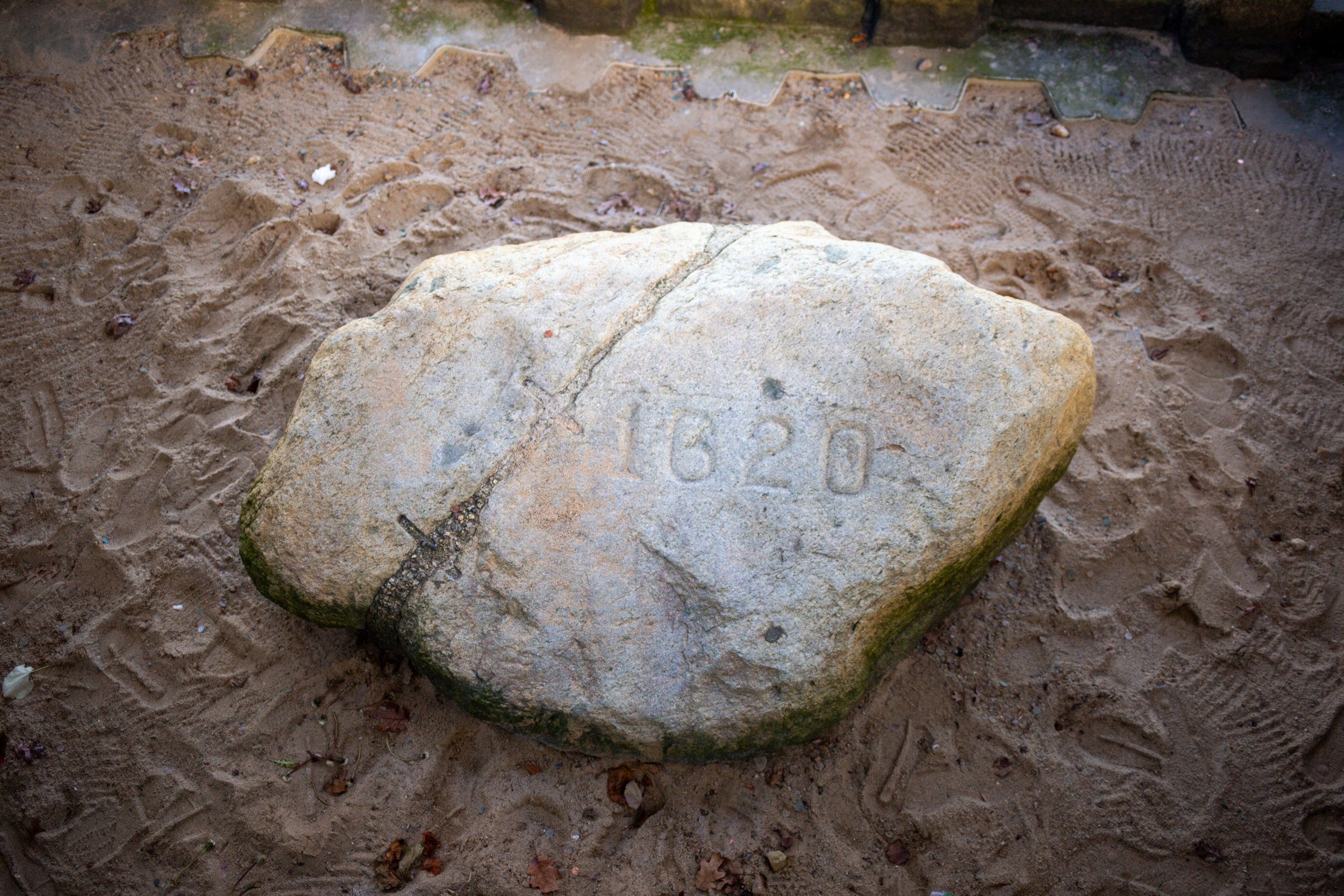
As the march snaked through town, I peeled off to see the “America’s Hometown fantasy” side of Plymouth. Located 40 miles south of Boston, Plymouth was famously the final landing site of the Mayflower in 1620 (it landed on Cape Cod first) and the colony that passengers established (named after the English town from which they set sail). The area became a hub for fishing, rope making, and, eventually, tourism; today Plymouth has a population of just over 60,000 residents.
The town is also home to the most famous rock in the U.S., the eponymous Plymouth Rock, which was identified as the Pilgrims’ disembarkation site in 1741 by a Mayflower descendent. The rock was moved several times, during which it split in two, and was placed at its current home in 1921. The repaired boulder sits under a Neo-Classical Revival granite portico designed by McKim, Mead, and White, which is the most appealing part of it; without—or perhaps because of—the beautiful portico, the rock is, by all accounts, underwhelming. Inscribed with the year 1920, it offers visitors little more than a poorly-lit photo-op. (I returned several times during my visit to see if I could glean anything about our country’s complicated history from this piece of Dedham granite, but even with a year’s reflection I can only say that Plymouth Rock is … just a rock.)

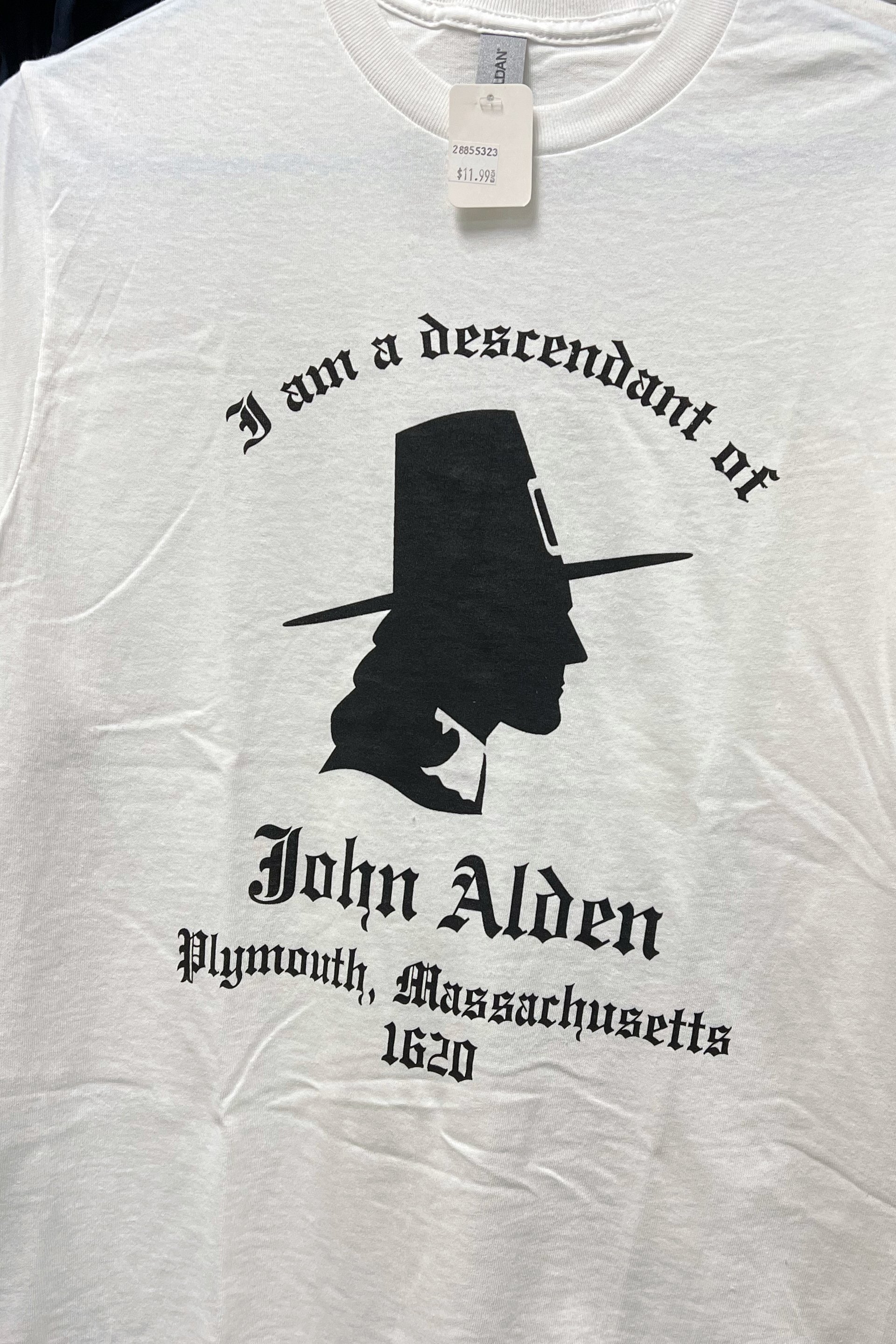
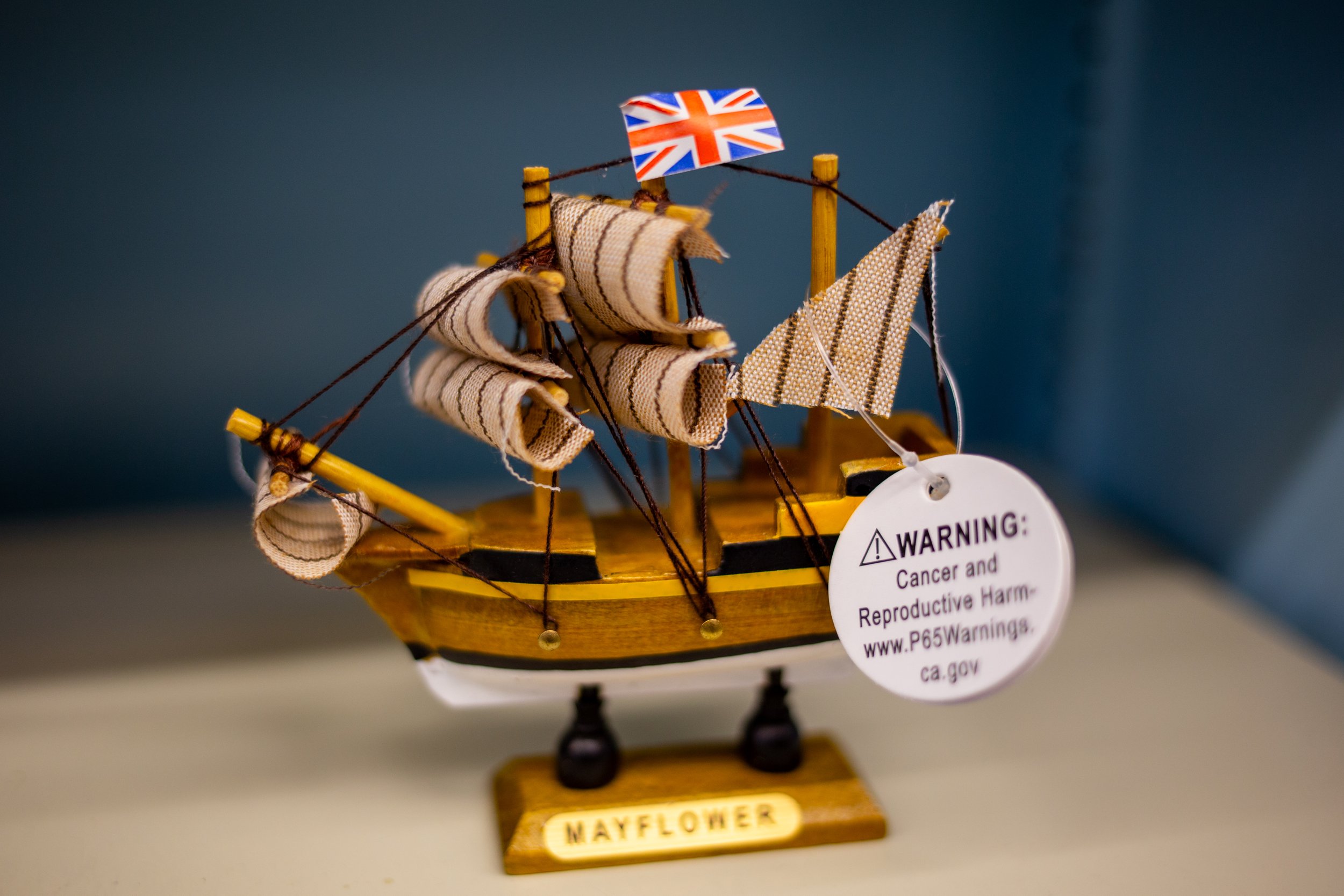
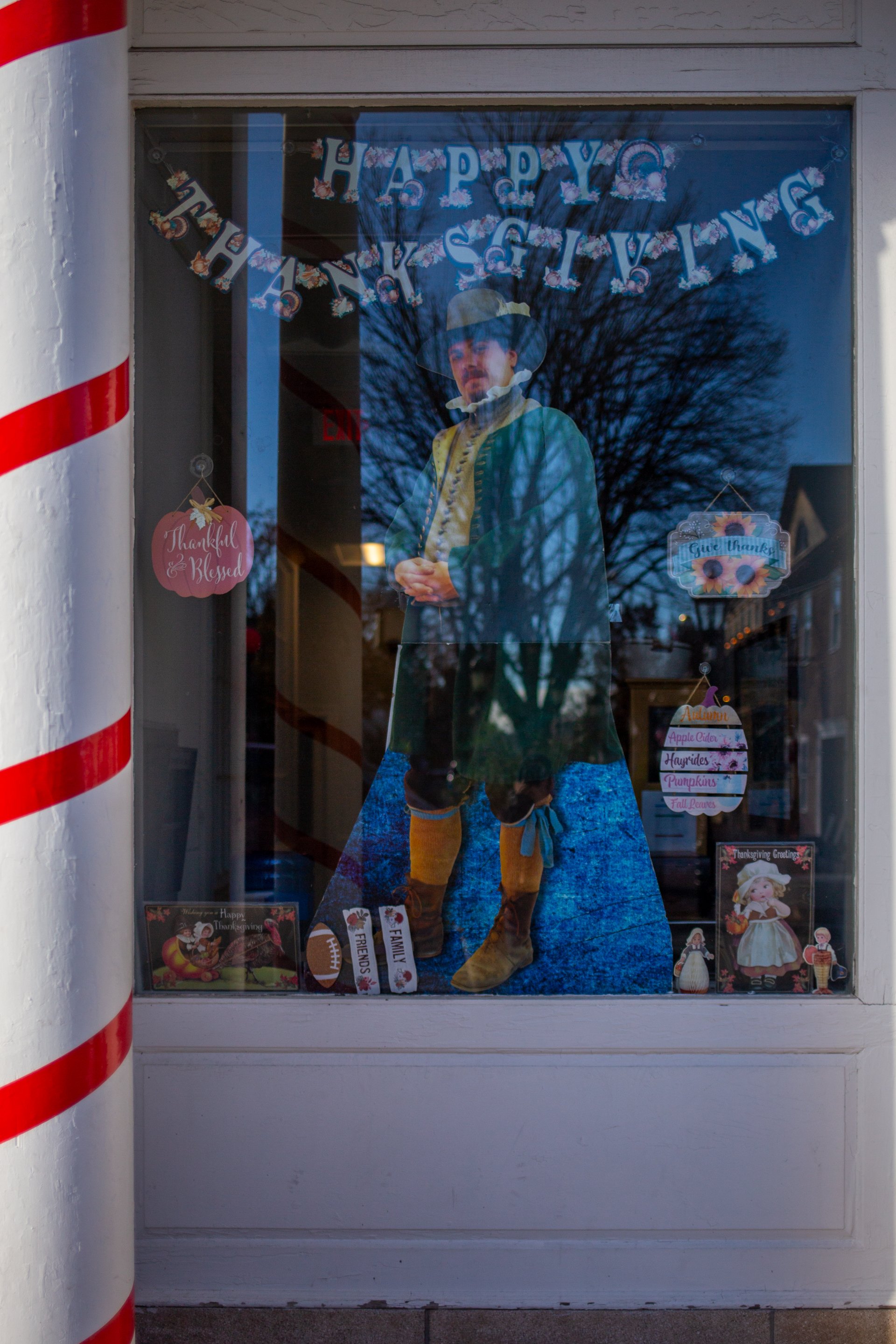
I stopped in the John Alden Gift Shop, one of only a few open businesses, and found trappings of the American fantasy in the form of Pilgrim hats and bonnets, Mayflower replicas, and t-shirts proclaiming the wearer to be a "descendent of John Alden.” Alden was a Mayflower colonist who had 10 children, the descendents of which have been estimated to top 1 million today (that’s a lot of potential customers). Sidewalk chalkings around the corner remind visitors—whether they want to acknowledge it or not—that “this is stolen land.”
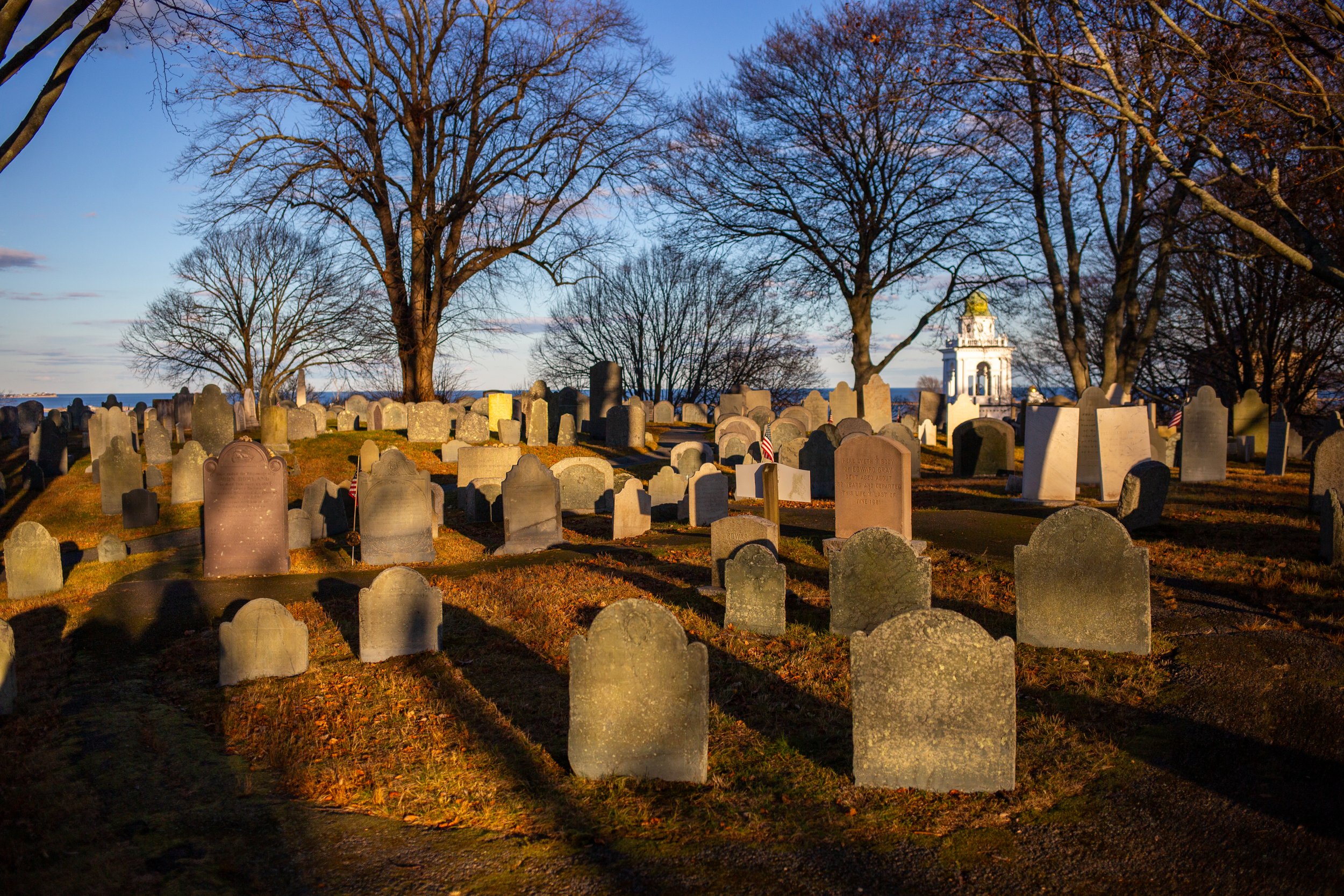
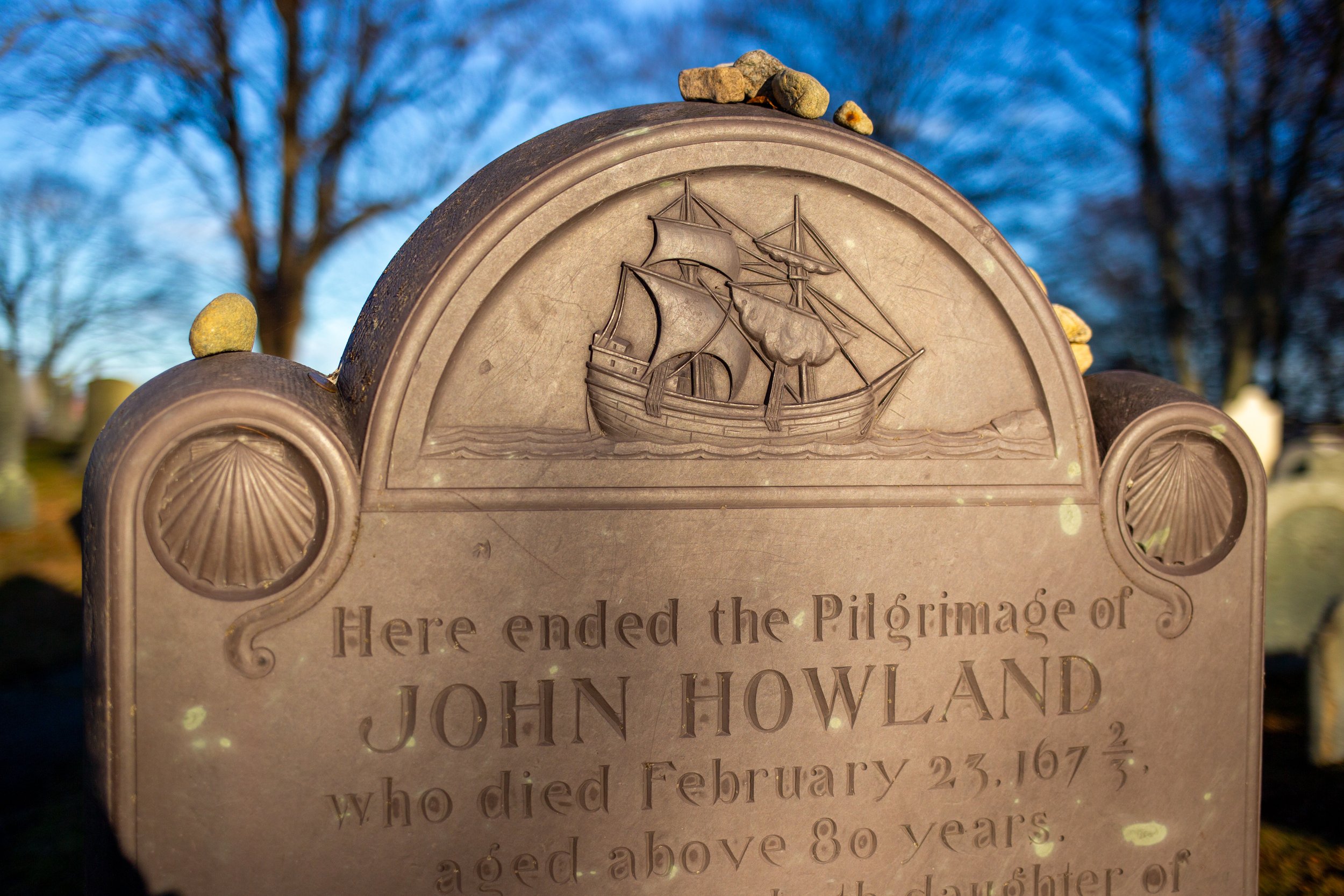
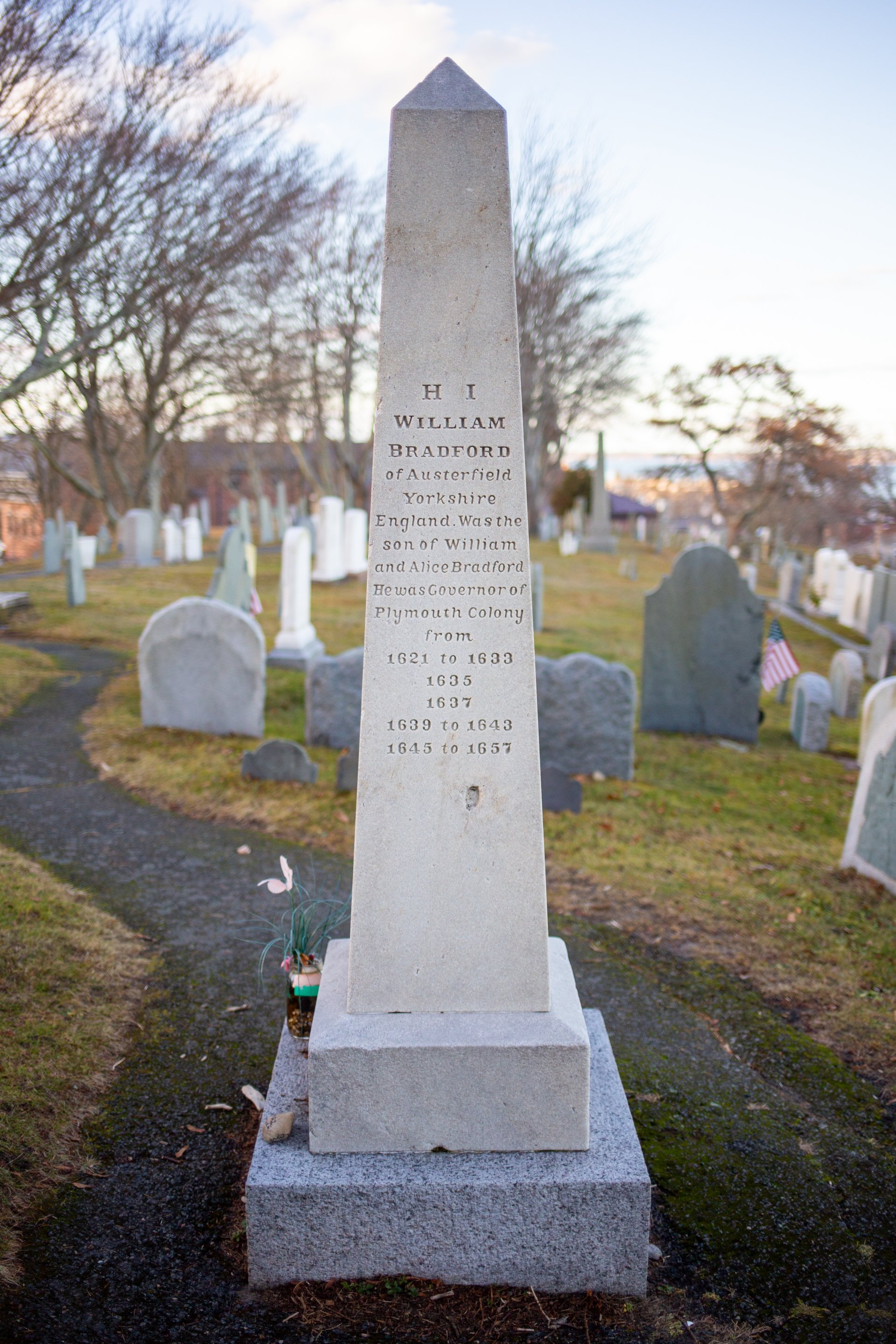
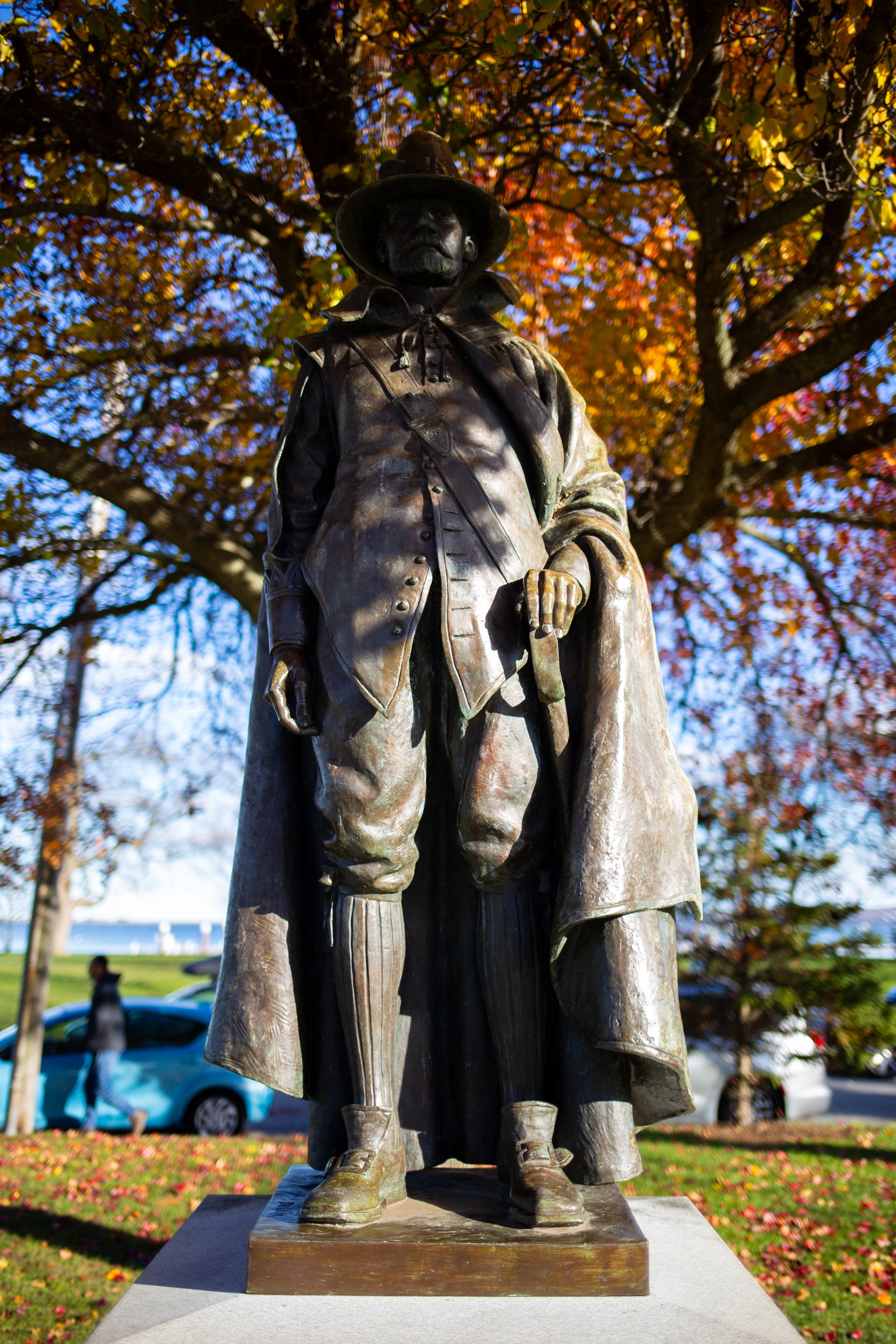
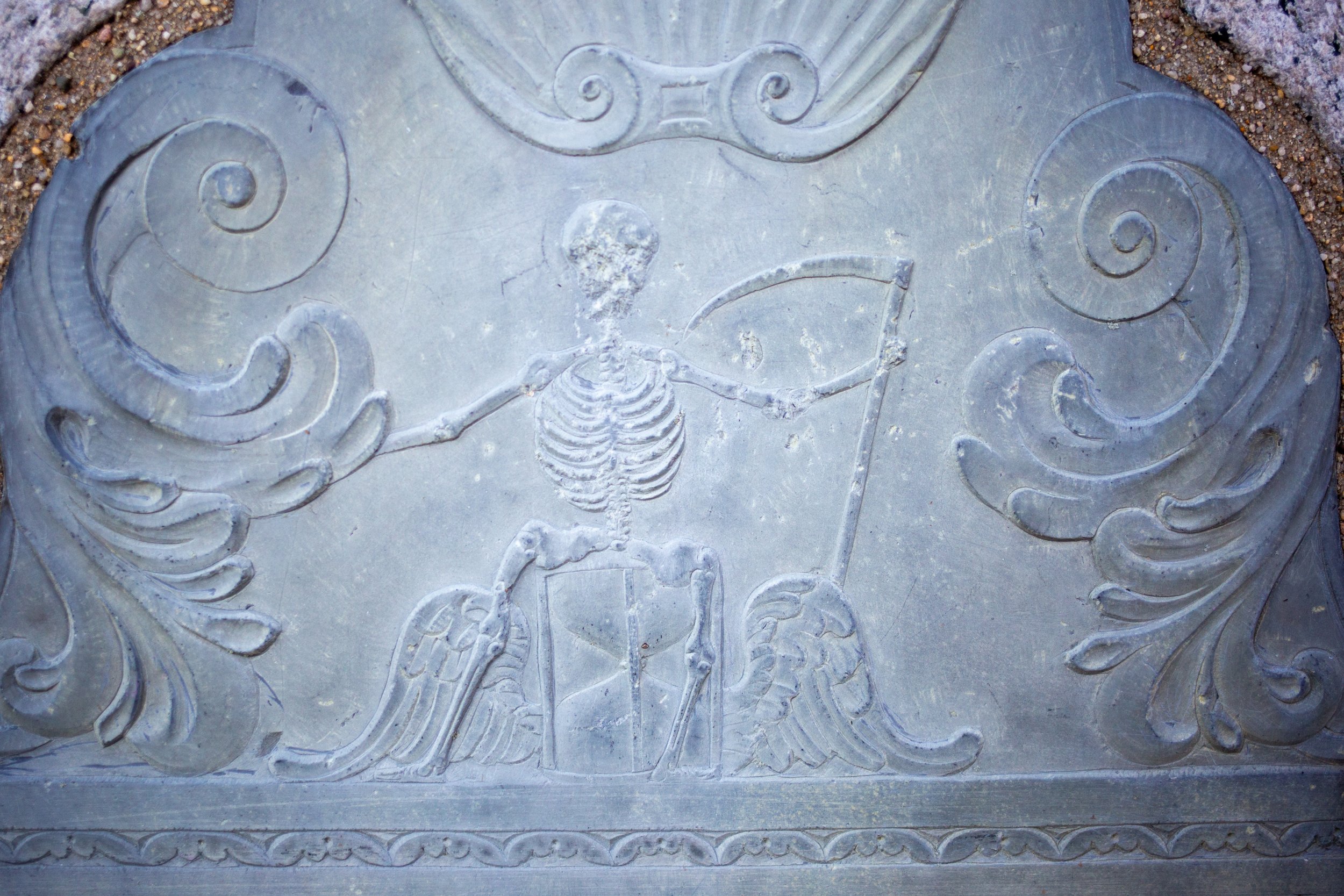
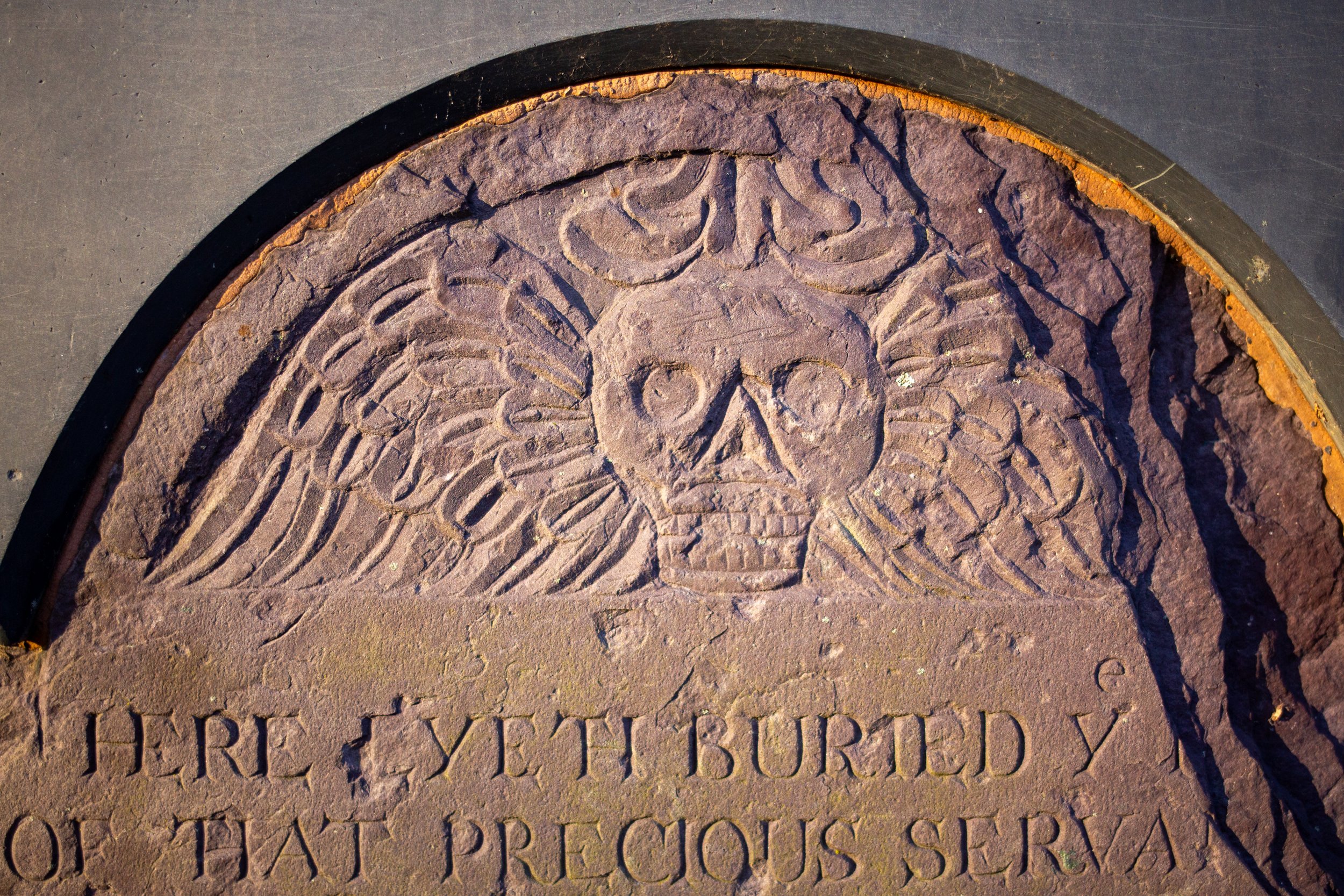
My last stop in Plymouth was Burial Hill, site of the Pilgrims’ first meeting house and burials that date to 1620 (the oldest surviving headstone is from 1681, and the last burial took place in 1957). Notable residents include William Bradford, governor of Plymouth Colony from 1621 to 1633 (whose statue stands as a counterpoint to Massoit at the bottom of Cole’s Hill), and Mayflower passenger John Howland. I’m a sucker for colonial graveyards, and Burial Hill is full of beautifully carved stones featuring skulls, cherubs, and nautical imagery.
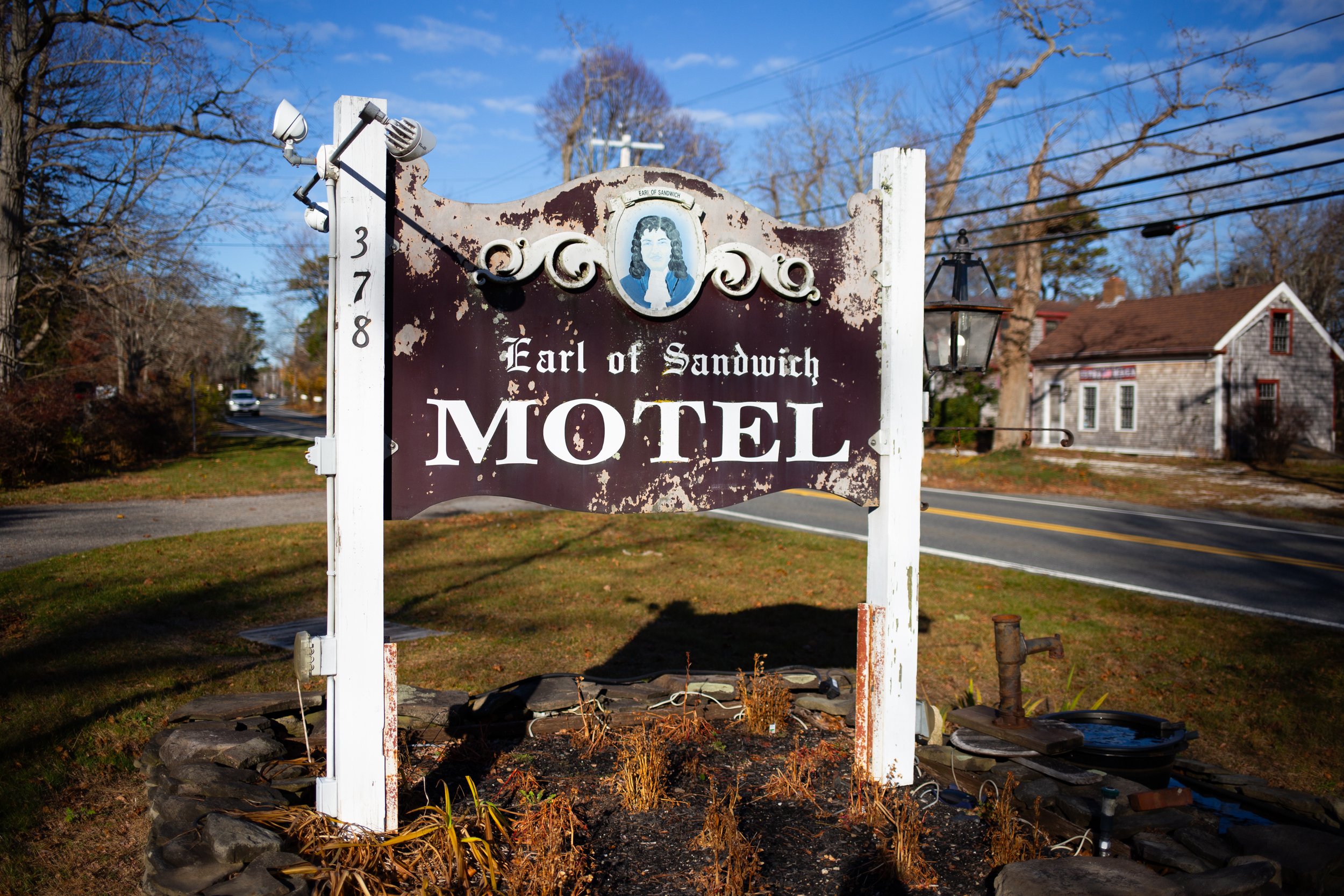
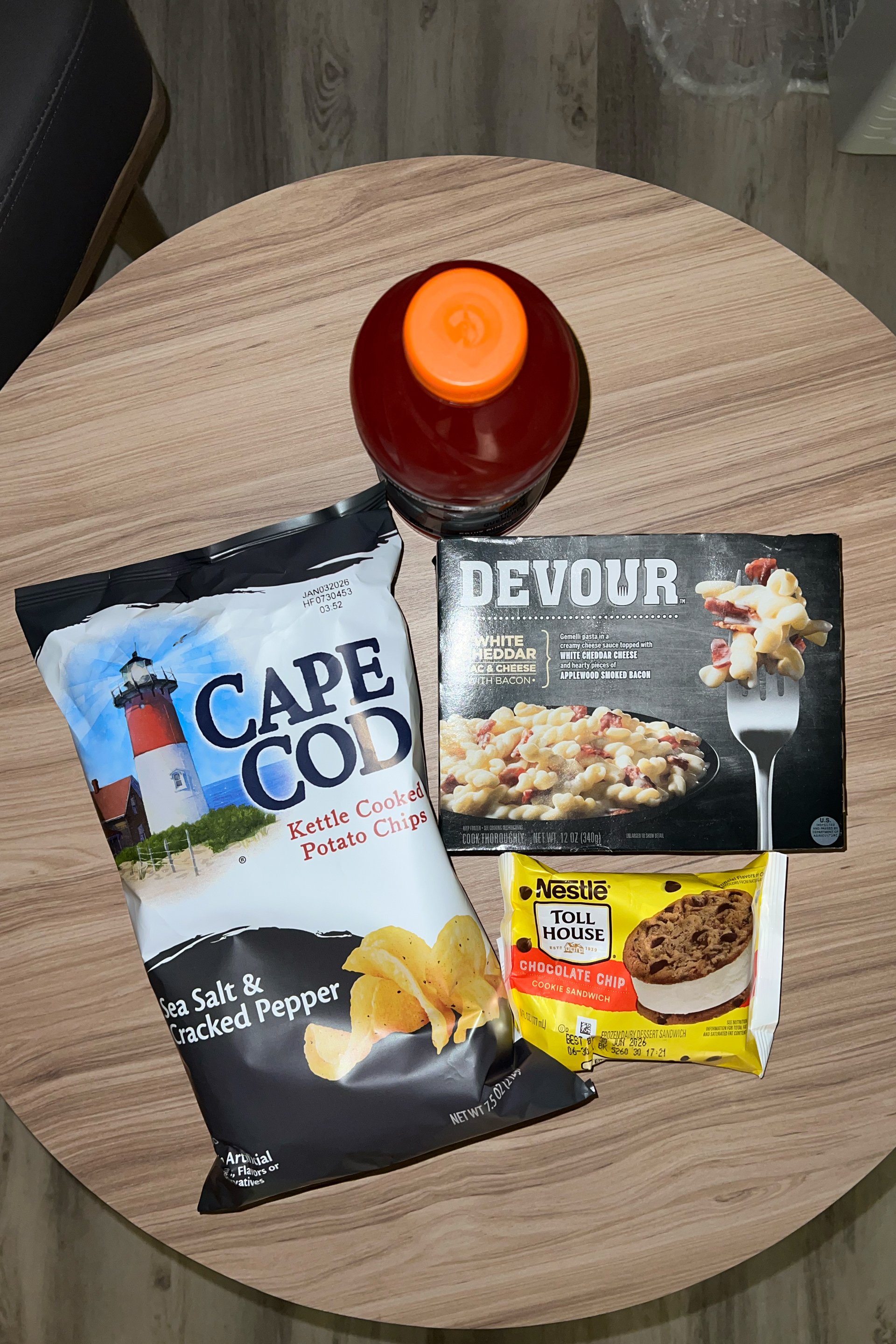
After the cemetery, I headed to Sandwich, Cape Cod, to check into my motel which I had booked both for its proximity to Plymouth and also for its name, The Earl of Sandwich. I struck out trying to find a last-minute Thanksgiving dinner—and after a brief cry in the parking lot of yet another closed restaurant, I ended up at a 7-11. I assembled a feast of Gatorade, chips, macaroni and cheese, and an ice cream sandwich, and took it back to my motel room to eat alone, in front of the TV. It wasn’t my most glamorous holiday, but it might have been the most fitting way to spend a complicated day in a country that has always been defined by its contrasts—from the Patuxet, to the Pilgrims, to the protestors, and everything in between.